HomeAboutTraining CoursesFAQ
العربيةmohd@sbeeh.com+962 77 984 65 64
SBEEH Software Academy

Instructor-led IT training delivered by Microsoft Certified Trainers (MCT) — in Amman, Jordan, and across the GCC.

Explore

  • About Us
  • IT Training Courses
  • Verify a Certificate
  • FAQ

Get in Touch

  • +962-779846564
  • mohd@sbeeh.com
  • Amman, Jordan

SBEEH Software delivers software development services, advanced technologies implementation, business process automation, IT consulting, and professional IT training led by Microsoft Certified Trainers (MCT) for organizations across Jordan, Saudi Arabia, UAE, Qatar, Kuwait, Bahrain & Oman.

© SBEEH Software. All rights reserved. 2026.

Back to Training Courses
Microsoft DevOps Engineering
DevOpsAdvancedFace to Face / Online

Microsoft DevOps Engineering

Microsoft DevOps Engineering is an advanced DevOps course delivered in person and online by SBEEH Software Academy in Amman, Jordan.

4 Days (32 Hours)

Last updated August 16, 2026

This 4-day, advanced course prepares experienced IT and development professionals to design and implement DevOps practices using Azure DevOps and GitHub, aligned with the skills measured in Microsoft's AZ-400 exam. The course moves beyond 'what is CI/CD' into the harder organizational and technical problems: designing branching and versioning strategies for real teams, building multi-stage pipelines with proper quality gates, implementing Infrastructure as Code, and instrumenting applications for continuous feedback.

Participants configure Azure Pipelines for build and release, implement Git branching strategies (trunk-based and GitFlow) and resolve real merge conflicts, build Infrastructure as Code with ARM/Bicep and Terraform, and set up dependency and container security scanning inside the pipeline. The course also covers the organizational side of DevOps transformation: measuring flow with DORA metrics, managing technical debt, and designing feedback loops using Application Insights.

This course is intended for developers, IT administrators, and DevOps/release engineers who already have hands-on experience with source control and basic deployment, and who need to design end-to-end DevOps pipelines rather than just use ones someone else built. It directly supports certification preparation for AZ-400: Designing and Implementing Microsoft DevOps Solutions.
Official reference: Microsoft Learn: DevOps documentation

Day 1: DevOps Foundations and Source Control Strategy

Main Topics:

  • DevOps principles and the DORA metrics
  • Git branching strategies (trunk-based, GitFlow, release flow)
  • Pull request workflows and code review policies
  • Azure Boards for work tracking

Detailed Subtopics:

  • Choosing a branching strategy based on team size and release cadence
  • Branch policies: required reviewers, build validation, status checks
  • Linking work items to commits and pull requests
  • Semantic versioning strategies

Hands-On Lab: Configure branch policies and a pull-request workflow in Azure Repos, then resolve a deliberately introduced merge conflict across two feature branches.

Real-World Scenario: A 12-person development team is shipping to production ad hoc through direct pushes to main and needs a controlled branching and review process.

Learning Outcome: Participants can design and configure a branching and code-review strategy appropriate to a team's size and release cadence.

Day 2: Continuous Integration and Build Pipelines

Main Topics:

  • Azure Pipelines YAML pipelines
  • Build agents, pools, and self-hosted agents
  • Automated testing in the pipeline
  • Artifact management with Azure Artifacts

Detailed Subtopics:

  • Multi-stage YAML pipeline structure
  • Parallelizing test execution
  • Code coverage gates and quality gates
  • Versioning and publishing NuGet/npm packages internally

Hands-On Lab: Build a multi-stage YAML pipeline that restores, builds, runs unit tests with a coverage gate, and publishes a versioned artifact.

Real-World Scenario: A .NET application team needs every pull request automatically built and tested before it can be merged, with a coverage threshold enforced.

Learning Outcome: Participants can author production-grade CI pipelines with quality gates and versioned artifact publishing.

Day 3: Continuous Delivery, Release Strategies, and Infrastructure as Code

Main Topics:

  • Release pipelines and deployment stages
  • Blue-green, canary, and ring-based deployments
  • Infrastructure as Code with ARM templates/Bicep and Terraform
  • Approval gates and environments

Detailed Subtopics:

  • Designing multi-environment (dev/test/staging/prod) release pipelines
  • Automated rollback strategies
  • Managing IaC state and drift
  • Using variable groups and Azure Key Vault integration for secrets

Hands-On Lab: Extend the Day 2 pipeline into a release pipeline deploying to a staging and production environment using Bicep templates, with a manual approval gate before production.

Real-World Scenario: The team's current deployments are manual, error-prone, and inconsistent between environments, causing 'works in staging, fails in production' incidents.

Learning Outcome: Participants can design a multi-stage release pipeline with Infrastructure as Code and appropriate approval and rollback strategies.

Day 4: Security, Monitoring, and DevOps Culture

Main Topics:

  • Shifting security left: dependency and container scanning
  • Application Insights and continuous feedback
  • Managing technical debt and flow metrics
  • Capstone: end-to-end pipeline design

Detailed Subtopics:

  • Integrating vulnerability scanning tools into pipelines
  • Setting up Application Insights alerts tied to deployments
  • Measuring lead time, deployment frequency, and change failure rate
  • Feature flags for safe, incremental rollout

Hands-On Lab: Add dependency vulnerability scanning to the pipeline and configure Application Insights to alert the team automatically if error rates spike after a deployment.

Real-World Scenario: A recent production incident was traced to a vulnerable third-party package that shipped undetected, and the team had no automated way to catch the regression.

Learning Outcome: Participants leave with a complete, secured, monitored CI/CD pipeline design they can adapt to their own organization, aligned with AZ-400 exam objectives.

Frequently Asked Questions

Additional Notes


Who Is This For?

This is an advanced course for professionals who will design DevOps pipelines and practices, not just use pipelines someone else configured.

  • Developers and software engineers moving into a DevOps or platform engineering role
  • IT administrators and release engineers responsible for CI/CD pipelines
  • Solution architects designing DevOps transformation strategies for a team or organization
  • Technical leads preparing for the AZ-400 certification exam

Prerequisites

This is an advanced course; participants should already have practical experience with source control and basic deployment before attending.

  • Hands-on Git experience (branching, merging, pull requests)
  • Prior experience with at least basic CI/CD concepts or tools
  • Working knowledge of Azure fundamentals (recommended: AZ-900 level or equivalent experience)
  • Basic scripting ability (PowerShell, Bash, or YAML) is expected

What certificate do I get after this course?

Upon successful completion of the training, participants will receive an official Certificate of Completion.
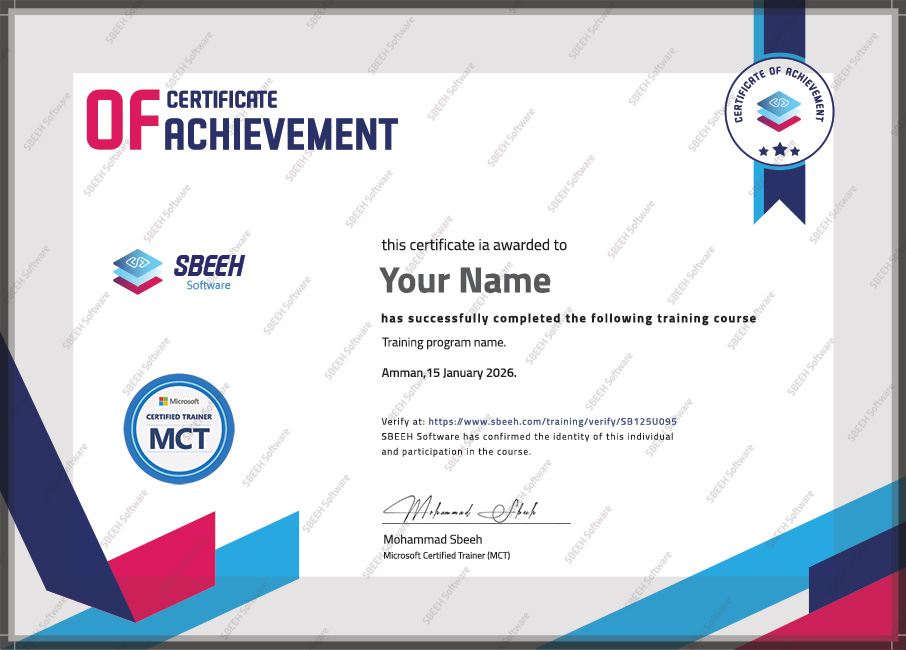

Certificate of Completion
Photo Gallery

Moments From This Training

A look at our training sessions — hands-on training sessions with professionals across Jordan and the GCC.

Interested in this training?

Reach out and we'll help you plan the right training for your team.

Back to all courses