HomeAboutTraining CoursesFAQ
العربيةmohd@sbeeh.com+962 77 984 65 64
SBEEH Software Academy

Instructor-led IT training delivered by Microsoft Certified Trainers (MCT) — in Amman, Jordan, and across the GCC.

Explore

  • About Us
  • IT Training Courses
  • Verify a Certificate
  • FAQ

Get in Touch

  • +962-779846564
  • mohd@sbeeh.com
  • Amman, Jordan

SBEEH Software delivers software development services, advanced technologies implementation, business process automation, IT consulting, and professional IT training led by Microsoft Certified Trainers (MCT) for organizations across Jordan, Saudi Arabia, UAE, Qatar, Kuwait, Bahrain & Oman.

© SBEEH Software. All rights reserved. 2026.

Back to Training Courses
Microsoft Power Platform Functional Consultant – Level 1
Power PlatformBeginnerFace to Face / Online

Microsoft Power Platform Functional Consultant – Level 1

Microsoft Power Platform Functional Consultant – Level 1 is a beginner Power Platform course delivered in person and online by SBEEH Software Academy in Amman, Jordan.

5 Days (40 Hours)

Last updated August 16, 2026

This 5-day, beginner-level course teaches participants to configure and deliver Power Platform solutions as a Functional Consultant, aligned with the skills measured in Microsoft's PL-200 exam. The course focuses on solving business problems through low-code configuration — Dataverse tables, model-driven and canvas apps, Power Automate flows, and Power Pages — rather than custom code, reflecting the actual role of a functional consultant on a Power Platform implementation project.

Participants gather and translate business requirements into a Dataverse data model, build both canvas and model-driven apps for different user needs, automate business processes with Power Automate, configure security roles and business rules, and build a simple external-facing portal with Power Pages. The course is scenario-driven throughout, following one small business's digital transformation project across the week.

This course is designed for business analysts, IT professionals, and citizen developers with no prior Power Platform experience who want to become effective functional consultants or power users, and is the standard prerequisite before the Power Platform Developer – Level 2 and Solution Architect – Level 3 courses for those continuing toward deeper technical or architectural roles.
Official reference: Microsoft Learn: Power Platform documentation

Day 1: Power Platform Overview and Requirements Gathering

Main Topics:

  • Power Platform components overview (Apps, Automate, Pages, BI, Copilot Studio)
  • The Functional Consultant role
  • Requirements gathering techniques
  • Environments and solutions

Detailed Subtopics:

  • Mapping business processes to Power Platform capabilities
  • Interviewing stakeholders for functional requirements
  • Understanding environments, solutions, and publishers
  • Introduction to Dataverse as the common data layer

Hands-On Lab: Given a small business scenario (a service-request process), interview a role-played stakeholder and document functional requirements for a Power Platform solution.

Real-World Scenario: A property management company handles maintenance requests entirely through phone calls and sticky notes, with no tracking or accountability.

Learning Outcome: Participants can gather and translate real business requirements into a Power Platform solution outline.

Day 2: Dataverse Data Modeling

Main Topics:

  • Tables, columns, and relationships in Dataverse
  • Choice columns and business rules
  • Views and forms
  • Security roles fundamentals

Detailed Subtopics:

  • Choosing appropriate column data types
  • One-to-many and many-to-many relationships
  • Configuring business rules for field-level logic without code
  • Basic security role configuration

Hands-On Lab: Design and build the Dataverse data model for the maintenance-request scenario, including tables for properties, tenants, and requests, with a business rule that requires a category before submission.

Real-World Scenario: The maintenance-request system needs to track which property and tenant each request belongs to, with required fields enforced automatically.

Learning Outcome: Participants can design and build a correct Dataverse data model for a real business scenario.

Day 3: Building Apps: Canvas and Model-Driven

Main Topics:

  • Canvas apps: screens, controls, and formulas
  • Model-driven apps: forms, views, and navigation
  • Choosing canvas vs. model-driven for a given need
  • App sharing and permissions

Detailed Subtopics:

  • Power Fx formulas for canvas app logic
  • Configuring model-driven app site maps and forms
  • Responsive canvas app design for mobile use
  • Sharing apps with the correct security roles

Hands-On Lab: Build a canvas app for tenants to submit maintenance requests from a mobile device, and a model-driven app for maintenance staff to manage and update requests.

Real-World Scenario: Tenants need a simple mobile-friendly way to submit requests, while maintenance staff need a full desktop interface to manage and prioritize a queue of requests.

Learning Outcome: Participants can build and choose between canvas and model-driven apps appropriate to different user roles.

Day 4: Process Automation with Power Automate

Main Topics:

  • Automated and instant cloud flows for business processes
  • Approval flows
  • Business process flows in model-driven apps
  • Notifications and status updates

Detailed Subtopics:

  • Triggering a flow when a new Dataverse record is created
  • Notifying maintenance staff automatically by priority level
  • Guiding users through a multi-stage process with business process flows
  • Testing and troubleshooting flows

Hands-On Lab: Build a flow that automatically assigns and notifies a maintenance technician based on request category and priority, and add a business process flow guiding staff through the request lifecycle.

Real-World Scenario: Urgent requests (e.g., no heating) currently get lost in the same queue as low-priority ones (e.g., a squeaky door), with no automatic prioritization.

Learning Outcome: Participants can automate a real business process end-to-end using Power Automate and business process flows.

Day 5: Power Pages and Solution Delivery

Main Topics:

  • Building an external-facing portal with Power Pages
  • Portal security and authentication
  • Packaging and deploying solutions
  • Capstone: complete solution walkthrough

Detailed Subtopics:

  • Configuring portal pages, forms, and lists tied to Dataverse
  • External user authentication options
  • Exporting and importing managed solutions between environments
  • User acceptance testing basics

Hands-On Lab: Build a simple Power Pages portal allowing tenants to log in and view the status of their own requests, then package the complete week's solution as a managed solution ready for deployment.

Real-World Scenario: Tenants currently have no way to check on the status of a request they submitted without calling the office directly.

Learning Outcome: Participants leave with a complete, working, multi-component Power Platform solution and the skills to deliver similar projects as a functional consultant, aligned with PL-200 exam objectives.

Frequently Asked Questions

Additional Notes


Who Is This For?

This course is for people configuring Power Platform solutions to solve real business problems, with or without a technical background.

  • Business analysts and functional consultants delivering Power Platform solutions
  • Citizen developers and power users automating processes within their department
  • IT professionals supporting or implementing Power Platform for their organization
  • Students or professionals transitioning into a low-code/no-code consulting role

Prerequisites

No prior Power Platform or coding experience is required, but familiarity with business processes is helpful.

  • No prior Power Platform experience required
  • No coding or programming background required
  • Familiarity with everyday Microsoft 365 tools (Outlook, SharePoint, Excel)
  • Basic understanding of how business processes work in an organization is helpful for the requirements-gathering exercises

What certificate do I get after this course?

Upon successful completion of the training, participants will receive an official Certificate of Completion.
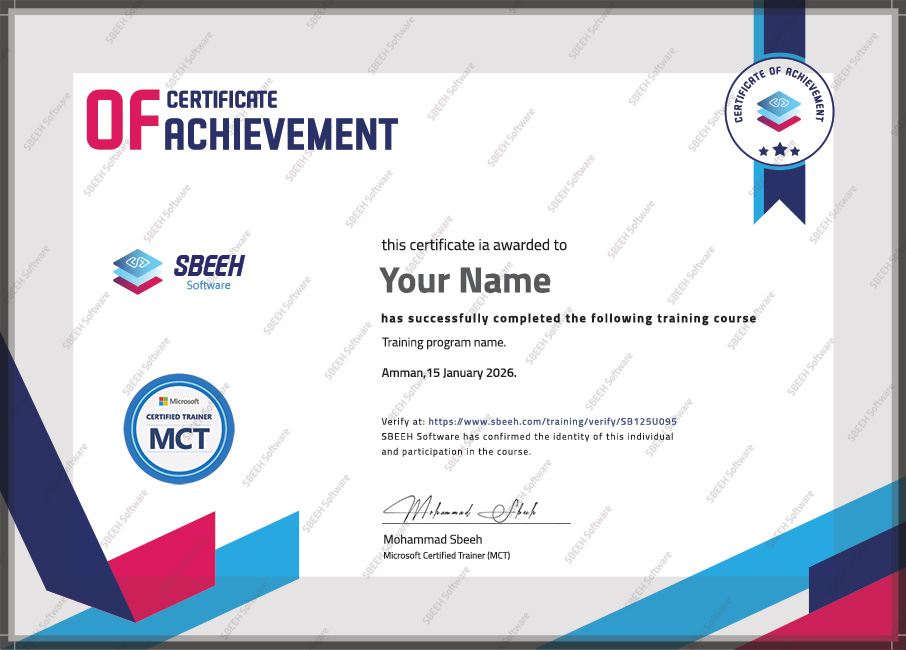

Certificate of Completion
Photo Gallery

Moments From This Training

A look at our training sessions — hands-on training sessions with professionals across Jordan and the GCC.

Interested in this training?

Reach out and we'll help you plan the right training for your team.

Back to all courses